Discover how leather cleaner legislation in Europe and the US shapes the poppers industry—and why PWD Factory's compliance work sets the gold standard for safety.
If you've ever wondered why your favorite room aroma comes in a bottle with a child-resistant cap and a detailed label covered in hazard pictograms, you're not alone. The world of alkyl nitrite products—sold legally across Europe and the United States as leather cleaners, room aromas, and similar cleaning preparations—operates inside a surprisingly detailed regulatory framework. Understanding that framework helps explain why quality matters, why counterfeits are dangerous, and why the NEVER FAKE IT® brand exists in the first place. This is the story of leather cleaner legislation, the compliance work it demands, and what happens when producers decide to skip it entirely.
What "Leather Cleaner" Actually Means in Law
Alkyl nitrites have been used recreationally by the gay community and beyond for decades, but they are not sold as recreational products. They are sold as cleaning preparations—specifically as leather cleaners and room aromas—and that classification is deliberate and legally meaningful. In both the European Union and the United States, the product category determines which regulatory body has oversight, which labeling requirements apply, and what safety measures manufacturers must put in place.
In the EU, cleaning products fall under a combination of frameworks including the CLP Regulation (Classification, Labelling and Packaging of substances and mixtures, Regulation EC No 1272/2008) and broader chemicals legislation. In the US, cleaning preparations are regulated under a different but equally structured framework, with the FDA and EPA both playing roles depending on the specific product and its claims. The leather cleaner category allows these products to be sold legally at retail while keeping them clearly outside the pharmaceutical supply chain.
This legal architecture didn't happen by accident. It reflects decades of negotiation between regulators, manufacturers, and consumer advocacy groups—particularly following health scares in the 1980s and 1990s that prompted stricter oversight. The result is a system that permits adult access while building in meaningful safeguards. Those safeguards only work, however, if manufacturers actually follow them.
The EU CLP Regulation: More Than a Label
The CLP Regulation is the cornerstone of how chemical products are classified and communicated across European markets. For a leather cleaner containing alkyl nitrites, CLP compliance means correctly identifying all hazards, selecting the appropriate hazard pictograms, writing compliant signal words and hazard statements, and ensuring the label appears in the official language or languages of every country where the product is sold. That's a significant undertaking for a product sold across twenty-seven EU member states.
Beyond the label itself, CLP compliance requires a Safety Data Sheet (SDS) that must be made available to downstream users and regulators. This document details everything from first-aid measures to storage conditions to environmental hazard profiles. For a small producer cutting corners, generating and maintaining accurate SDSs for multiple formulations and markets is exactly the kind of overhead they'd rather avoid. For a serious manufacturer, it's simply part of doing business correctly.
Child-resistant closures are another non-negotiable requirement for certain hazardous preparations under EU law. The specific closure mechanism must meet tested standards—it can't just be a cap that's slightly difficult to open. This matters enormously from a safety perspective, especially in households that include children. It also adds cost and complexity that counterfeit operations routinely sidestep.
The US Regulatory Picture for Cleaning Products
In the United States, the regulatory landscape for cleaning preparations is shaped by a combination of federal and state-level rules. At the federal level, cleaning products can fall under EPA jurisdiction for environmental claims and labeling, while the Consumer Product Safety Commission (CPSC) governs child-resistant packaging requirements under the Poison Prevention Packaging Act. Products making any kind of health-adjacent claim can attract FDA scrutiny as well.
For leather cleaners specifically, the CPSC's packaging requirements are particularly relevant. Child-resistant packaging isn't optional for preparations that present acute toxicity concerns—it's a federal legal requirement. Importers and distributors who bring non-compliant products into the US market are exposing themselves to significant legal liability, quite apart from the ethical problem of selling an unsafe product.
The patchwork of US state-level regulations adds another layer of complexity. California's Proposition 65, for example, requires specific warnings for products containing chemicals known to the state to cause certain health effects. Navigating all of this correctly requires genuine legal and regulatory expertise, not just a cursory read of a competitor's label.
How PWD Factory Approaches Compliance
PWD Factory, the manufacturer behind NEVER FAKE IT® products, treats regulatory compliance not as a box-ticking exercise but as a core part of product quality. Every product in the range is developed with full CLP classification from the outset, meaning hazard identification happens before a product goes to market—not as an afterthought.
Child-resistant caps are standard across the product line. PWD Factory uses tested, certified closures that meet the relevant EU and US standards, not generic caps sourced from the cheapest available supplier. Each batch is produced with full traceability documentation, meaning that if a regulator in France, Germany, or the United States has a question about a specific lot, the manufacturer can provide a complete chain of custody from raw material to finished product.
Labeling is handled with equal rigor. Every label is reviewed for CLP compliance in the relevant market languages, and updates are made whenever regulatory requirements change—which they do, periodically, as the EU updates its hazard classifications or as individual member states add national requirements. This ongoing compliance work is expensive and invisible to the end consumer, but it's what separates a legitimate manufacturer from a producer who simply fills bottles and hopes for the best.
You can explore the full range of compliant NEVER FAKE IT® products at our products page, where each listing reflects this commitment to regulatory integrity.
What Counterfeit Producers Leave Out
Here is where the story gets darker. The counterfeit market for leather cleaners is substantial, and the producers behind fake products—including a well-documented French laboratory operation and an Austrian producer whose products have circulated widely in the EU market—share a common characteristic: they skip compliance steps entirely.
Non-compliant child-resistant caps are one of the most common shortcuts. A counterfeit bottle may look similar to a legitimate product from a distance, but the closure mechanism often fails the technical tests required by EU and US law. That's not just a regulatory failure—it's a direct safety risk, particularly for households with young children.
CLP labeling on counterfeit products is frequently wrong, incomplete, or simply copied from another product without verification. Hazard statements may be missing or inaccurate. Signal words may be incorrect. In some cases, counterfeit labels have been found to list incorrect hazard pictograms—a serious problem because those pictograms communicate critical safety information to first responders and healthcare professionals in an emergency.
Batch traceability is essentially nonexistent for most counterfeit producers. When a health authority investigates a product-related incident, they need to trace a specific batch back through the supply chain. Legitimate manufacturers like PWD Factory can do this. Counterfeit producers cannot—and in many cases, the people selling their products don't even know who made them. Learn more about protecting yourself at our anti-counterfeit page and always verify your product's authenticity before use.
Why Authenticity Markers Matter for Compliance
One of the practical challenges of leather cleaner legislation is that it only works if legitimate products can be distinguished from counterfeits. A compliant label on a fake product is worth nothing if the fake product contains an uncharacterized formulation, was manufactured in unsanitary conditions, or has been stored incorrectly. The label is only meaningful when it accurately describes what's actually in the bottle.
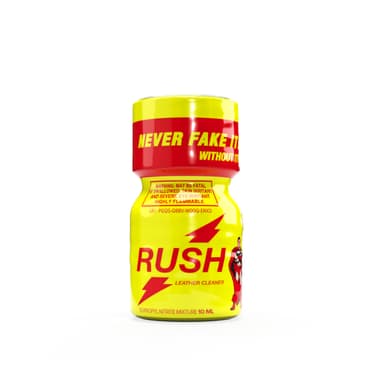
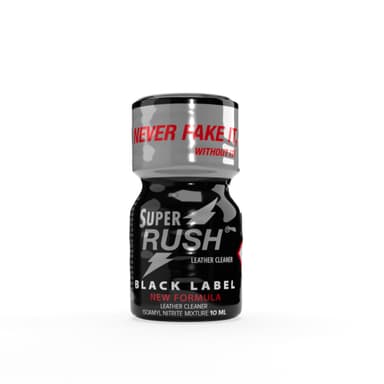
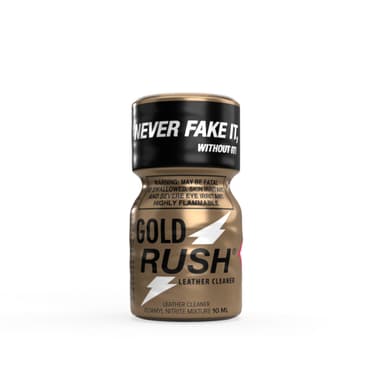
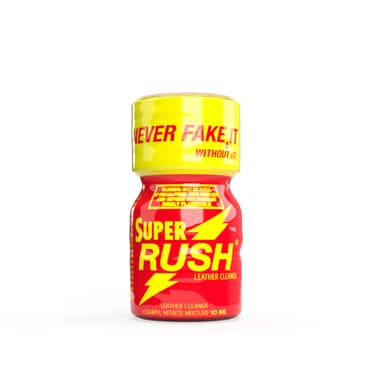
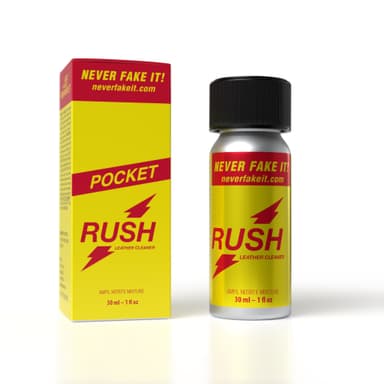
This is why the NEVER FAKE IT® brand invests in physical authenticity markers—most visibly the distinctive NEVER FAKE IT® logo on every genuine product. The official website, www.never-fake-it.com, serves as the authoritative reference point for consumers who want to verify that what they're holding is the real thing. These aren't marketing flourishes. They're part of a coherent strategy to protect consumers in a market where counterfeits are genuinely common.
Regulatory compliance and brand authenticity reinforce each other. A genuine PWD Factory product is compliant because it was made by people who understand and follow the rules. A counterfeit might carry a copied logo, but it can't carry the underlying quality assurance that makes the logo meaningful.
Where to Buy Genuine, Compliant Products
Knowing that a product is compliant only helps you if you can actually buy the compliant version. PWD Factory has established a network of authorized partner stores specifically to ensure that consumers across different markets have access to genuine NEVER FAKE IT® products. These partners are vetted, understand the compliance requirements of their local markets, and stock only authentic inventory.
Authorized partners include Twisted Beast serving the UK and the US, poppers-rapide.eu serving France, Tom Rockets serving Germany and across the EU, and poppers-portugal.com serving Portugal. Each of these retailers has been selected because they share the same commitment to product quality and consumer safety that defines the NEVER FAKE IT® brand.
Buying through an unauthorized channel—a random online marketplace listing, an unfamiliar website, a seller with no verifiable track record—is exactly how consumers end up with counterfeit products that carry none of the compliance protections described in this article. The packaging may look right. The price may be attractive. But the child-resistant cap might fail, the label might be wrong, and the contents might be something entirely different from what you expect.
Leather cleaner legislation in Europe and the US exists to protect people—and it works, but only when manufacturers take it seriously. PWD Factory does. If you're ready to buy genuine, fully compliant NEVER FAKE IT® products from a verified authorized retailer, head to our where to buy page and find the partner store closest to you.